


Get in Touch with Us!
.png)
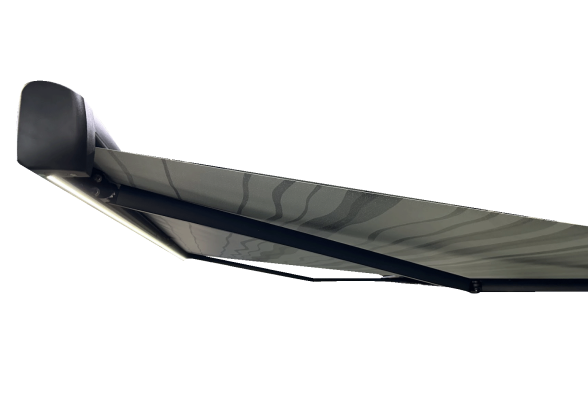
A high-quality awning for recreational vehicle roof mount is much more than a shading accessory; it is a structural component that must balance strength, weight, and long-term weather endurance. Roof-mounted awnings face constant vibration, wind pull, and uneven load distribution while the vehicle is in motion. That is why RV manufacturers increasingly prioritize aluminum extrusion quality, torsion spring balance, and internal reinforcement rather than just the appearance of the cassette. If the roof mount system is designed with precise bracket geometry and reinforced hinge points, it reduces stress on the RV’s roof panel and enables long-term reliability across thousands of deployment cycles.
Many RV builders also prefer roof-mounted systems because they preserve the sidewall space for storage doors, windows, and utility ports. A manufacturer that provides multiple mounting options—flat roof, curved roof, rail mounting, bracket mounting—gives RV brands the flexibility to integrate the awning into different model-year designs without redesigning the vehicle structure.
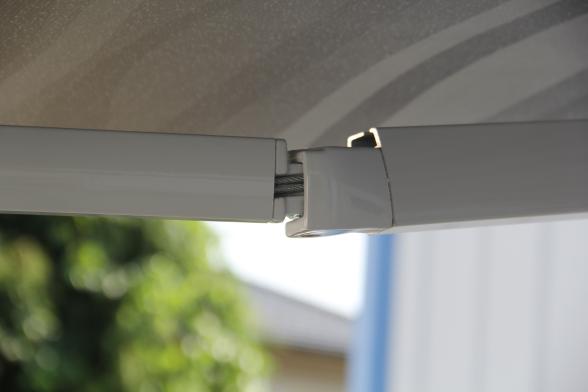
A durable awning for camper trailer extension plays a crucial role in expanding the usable living area of towable trailers. Since camper trailers are often used for long stays at campgrounds, shade coverage becomes one of the most important comfort features for families traveling with children. The awning must extend smoothly, lock firmly, and maintain fabric tension even in mild wind. Trailer manufacturers usually focus on several engineering factors—arm stability, sidewall bracing, and canopy projection depth—because a wobbly awning immediately hurts the perceived quality of the trailer.
Unlike large motorhomes, camper trailers often have lightweight frames, so awning weight becomes a critical factor. When the awning manufacturer can supply lightweight cassettes, optimized arm joints, and anti-rust coatings, trailer builders gain a competitive advantage in both durability and ease of installation. A good extension awning also allows users to place tables, chairs, or cooking setups under a stable shaded area, turning a compact trailer into a functional outdoor home.
The awning for RV side shade is designed for travelers who constantly switch between environments—mountain parking lots, desert campsites, coastal RV parks, and forest routes. Side awnings must adapt to uneven ground, angled sunlight, and occasional wind pressure. Manufacturers that focus on adjustable pitch angle, glide-smooth arms, and reinforced joints create awnings that maintain fabric tension no matter where the RV is parked.
Side shade awnings also play an aesthetic role. Modern RV buyers look not only for functional shading but also for clean lines, low-noise deployment, and harmonized color matching between the awning fabric and the RV exterior. A well-designed side shade awning enhances the perception of the entire RV brand and increases the long-term resale value of the vehicle.
| Awning Type | Primary Benefit | Best Use Case |
|---|---|---|
| Roof Mount RV Awning | Preserves sidewall space; superior stability | Full-size motorhomes & premium RVs |
| Camper Trailer Extension Awning | Expands outdoor living area | Towable trailers & long-stay campsites |
| RV Side Shade Awning | Flexible shade coverage & angle control | Mixed-terrain and mobile travelers |
Wind Load Tolerance
All three awning types must pass wind stability testing. Wind resistance depends on arm thickness, torsion spring strength, and how evenly the awning distributes force back into the RV frame.
Material Standards
Solution-dyed acrylic fabrics resist fading; PVC-coated polyester withstands heavy rain. Aluminum profiles must be anodized or powder-coated to prevent salt corrosion, especially for coastal travelers.
Ease of Installation for RV Builders
Modern RV factories want faster mounting, fewer drilling points, and more bracket compatibility. A supplier that provides pre-engineered mounting kits reduces installation errors and lowers labor costs.
Long-Term User Convenience
From adjustable pitch angles to smooth manual override functions, small details significantly affect daily use. Buyers immediately notice if deployment is noisy or fabric tension is uneven.
Whether it is a roof mount awning for recreational vehicles, an extension awning for camper trailers, or a side shade awning for RVs, the correct choice always returns to engineering quality, material consistency, and real-world testing. RV manufacturers and trailer builders who work closely with reliable awning suppliers can create outdoor spaces that feel stable, comfortable, and durable—enhancing both the travel experience and the reputation of the brand.
A well-designed awning does not simply provide shade; it transforms every stop into a functional, livable outdoor environment. That is the difference high-quality manufacturing brings to modern RV design.
Get in Touch with Us!
Are you ready to take your RV camping experience to the next level? At NATURE AWNING, we specialize in crafting premium RV awnings that combine durability, ease of use, and stylish design to create the perfect outdoor living space. Whether you're planning a weekend getaway or a long-term road trip, our awnings provide the shade and comfort you need to enjoy every moment.