


No products in the cart.
Brand anchor
From Garden Awnings to RV Awnings: The Real Difference Lies in the Structure
At NATURE AWNING, our understanding of awnings did not begin with RV applications.
Before entering the RV awning market, we spent years manufacturing garden awnings. This experience taught us that an awning is not simply a piece of fabric extending from a wall or vehicle. It is a complete structural system involving aluminum profiles, support arms, fabric tension, mounting points, operation mechanisms and long-term outdoor exposure.
Moving from garden awnings to RV awnings changed the application environment, but it did not change the fundamental importance of structure, materials and manufacturing control.

Where Our Awning Experience Began
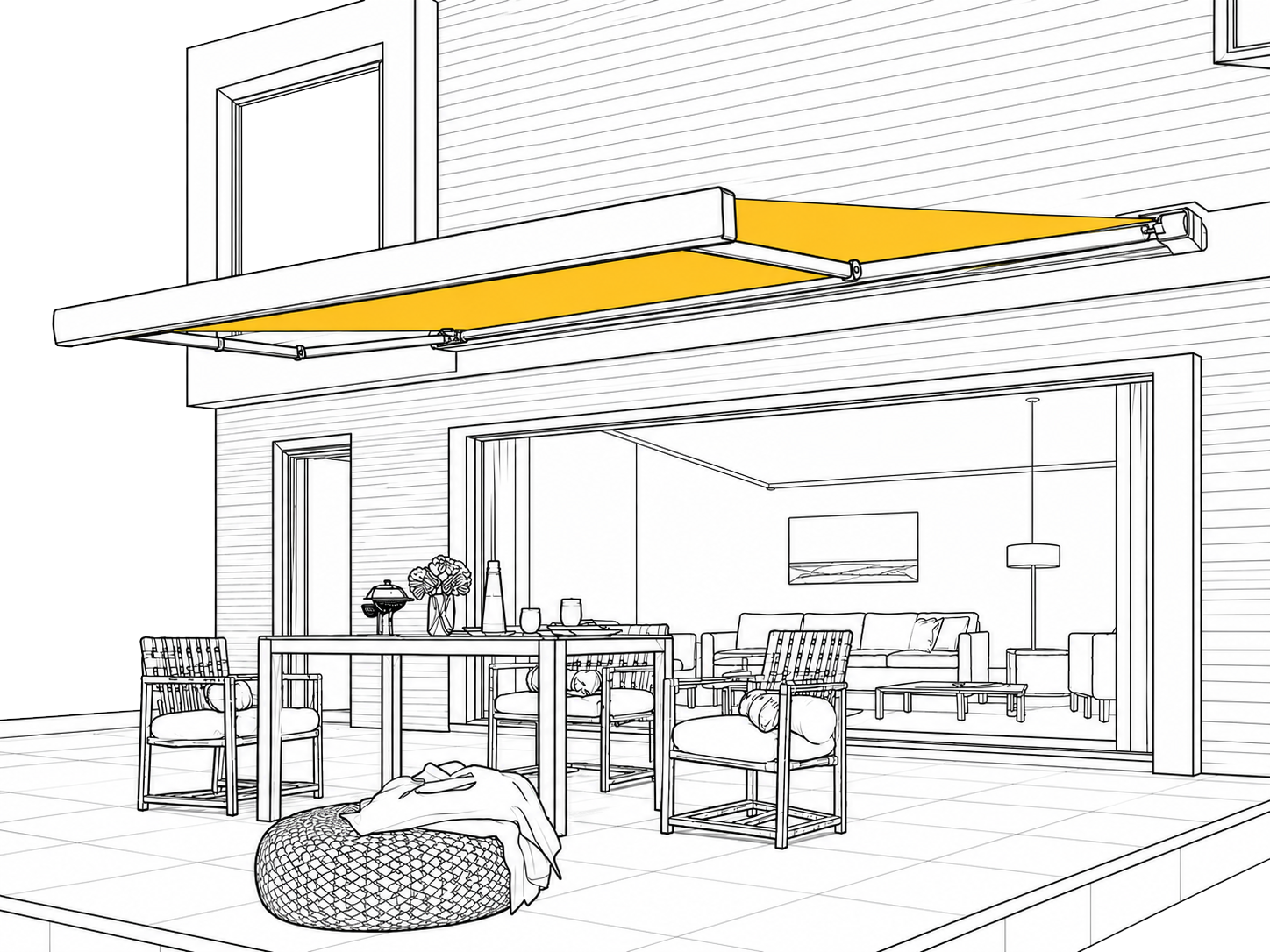
Garden awnings are usually installed on exterior walls or building structures. They face sunlight, rain, wind load, repeated opening and closing, and the structural pressure created by large projection areas.
From a manufacturing perspective, a garden awning is closer to an exterior structural system than a simple shading product.
The fabric, front bar, articulated arms, roller tube, brackets and fixing points work together as one complete load-bearing system. When wind acts on the fabric, the load is transferred through the arms, cassette, brackets and mounting structure.
This means that profile strength, arm support, bracket rigidity, connection design and installation accuracy all affect the long-term safety and performance of the product.
What Garden Awning Manufacturing Teaches
Long-term garden awning manufacturing helped us develop a more systematic understanding of the factors that determine awning reliability.
Structure must remain stable. The complete awning system must manage fabric tension, temporary loads and repeated movement without losing alignment or operational consistency.
Fabric must maintain tension. A good awning should stay flat and controlled when fully extended, without obvious sagging or uneven rolling.
Drainage and installation angle must be considered. Larger shading areas can collect rainwater if the slope is insufficient, creating additional load on the fabric, front bar and arms.
Operation must remain smooth and repeatable. Whether the awning uses a manual crank or an electric motor, assembly precision and transmission consistency directly affect long-term operation.
Materials must also be suitable for outdoor exposure. Aluminum profiles, surface treatments, fabrics and hardware need to withstand sunlight, rain, humidity, temperature changes and repeated daily use.
These requirements trained our team to look beyond appearance and focus on how every component works together as a complete structural system.
Why RV Awnings Require a Different Balance
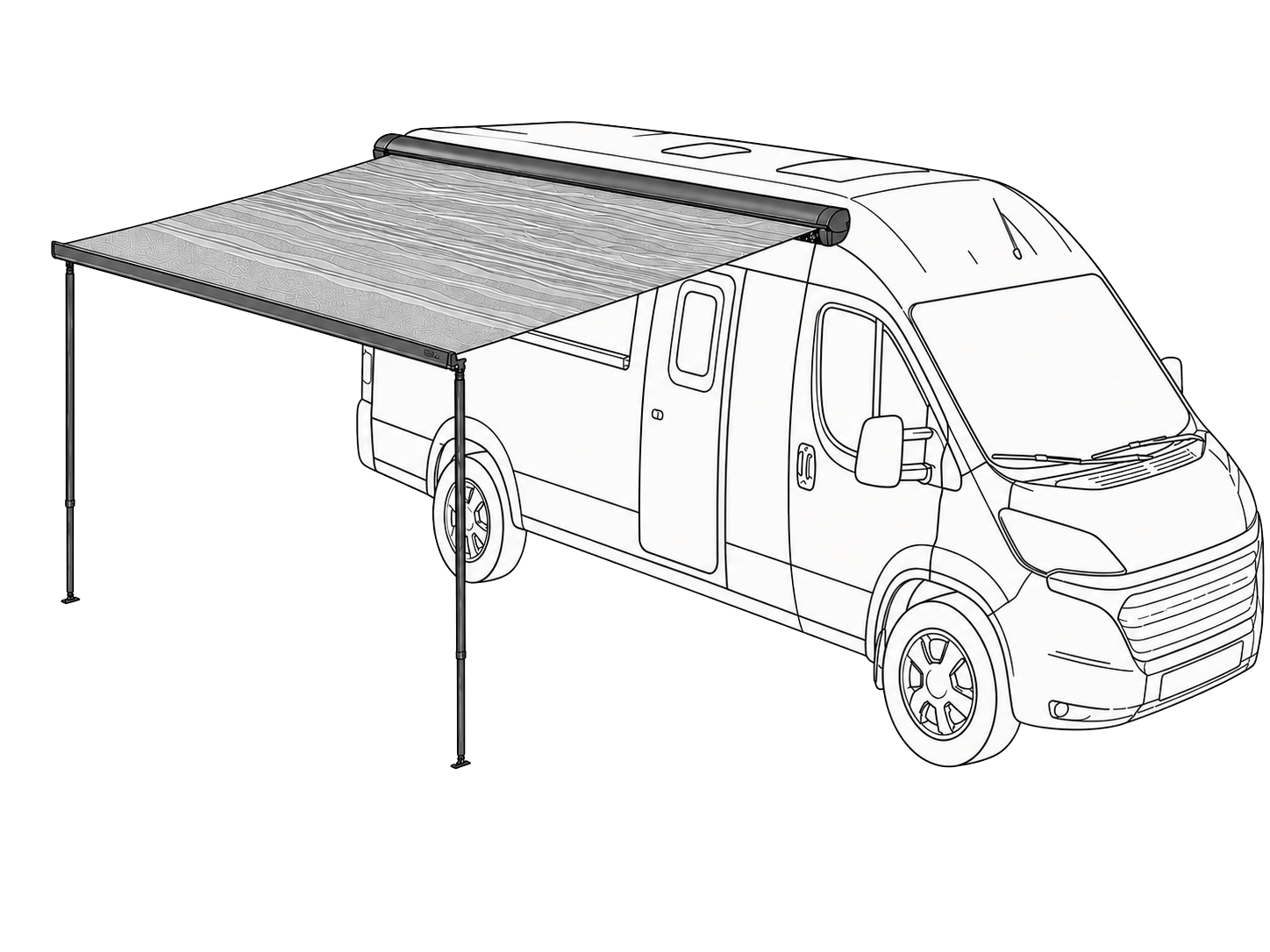
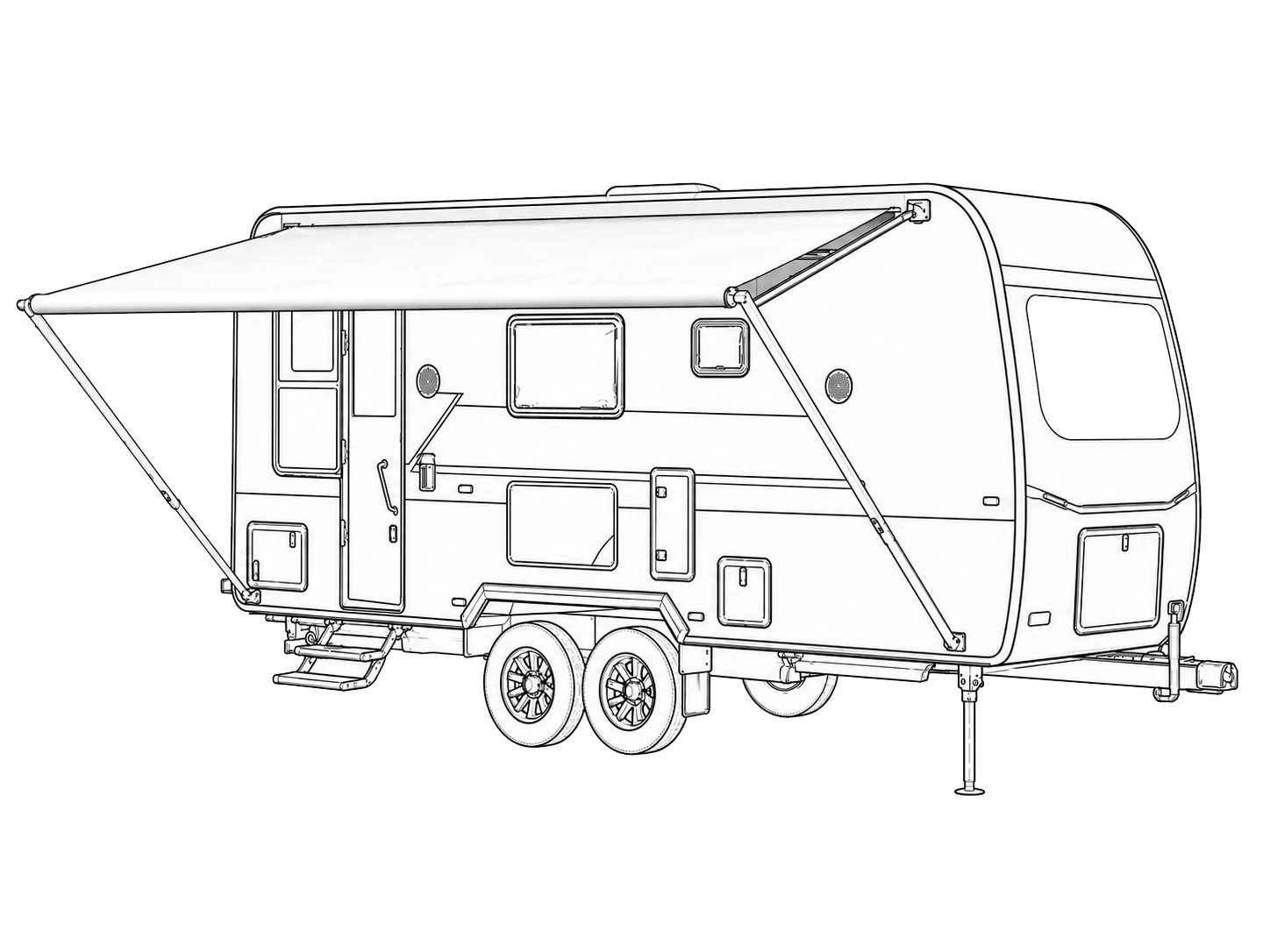
RV awnings share many structural elements with garden awnings. Both use a housing, roller tube, fabric, front bar, support arms and an operating system.
However, an RV awning is installed on a moving vehicle rather than a fixed building.
It must withstand vehicle vibration, highway travel, changing road conditions, different climates and repeated use in campsites and outdoor environments. It must also remain secure and compact when retracted.
The design priorities therefore change.
An RV awning cannot rely on heavier and thicker materials alone to achieve strength. Excessive weight increases the load on the vehicle and makes installation and operation more difficult. At the same time, reducing too much material can compromise rigidity and long-term durability.
A reliable RV awning must find the right balance between lightweight design, structural stability, smooth operation, fabric tension and secure retraction.
Material Choices Must Serve the Application
When moving from garden awnings to RV awnings, we did not simply copy the same material solution.
Each component was reconsidered according to the needs of vehicle-mounted outdoor use.
Aluminum profiles must balance weight, rigidity, corrosion resistance, extrusion quality and processing stability. Fabric must provide waterproofing and outdoor protection while maintaining tension and stable rolling performance. Support arms and locking structures must operate smoothly and remain secure after retraction.
For this reason, NATURE AWNING focuses on materials that provide balanced performance rather than one extreme specification.
Our 6063-T5 aluminum profiles support lightweight and precision-extruded awning structures, while our PVC fabrics are selected for waterproofing, dimensional stability, repeated rolling and practical outdoor maintenance.
More details about our materials, surface treatment and testing are available in our Know-How section.
Our Strength Comes from Understanding Both Applications
Garden awnings taught us the fundamentals of structural load, fabric tension, drainage, installation and long-term weather resistance.
RV awnings required us to apply that experience in a mobile environment, where lightweight design, easy operation, secure retraction and vehicle compatibility become equally important.
This combination forms the foundation of NATURE AWNING’s approach to RV awning manufacturing.
We do not evaluate an awning only by how it looks when it leaves the factory. We focus on how it performs during installation, repeated opening and closing, outdoor exposure, transportation and long-term use.
The product form may change from a building-mounted garden awning to a vehicle-mounted RV awning, but the core principle remains the same:
A reliable awning must first be a reliable structural system.